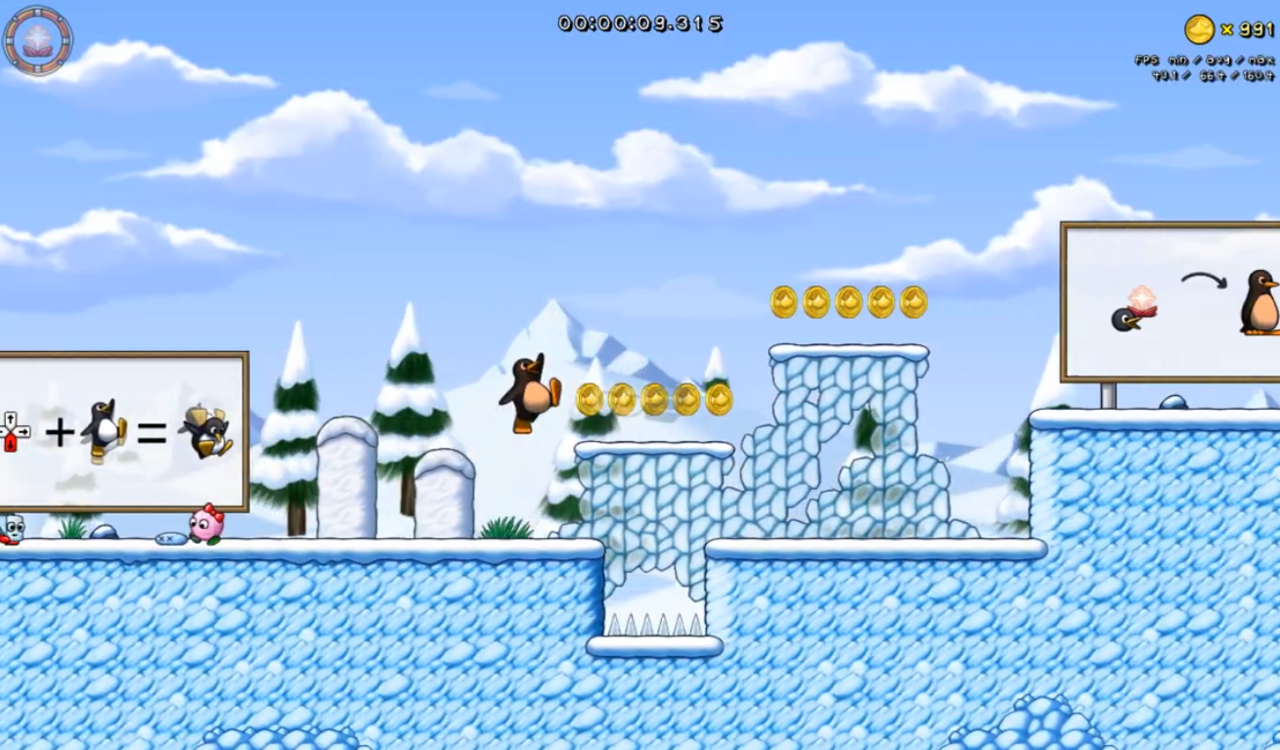
We ran our first small game jam in July: twelve people, one weekend, the theme “only one button”. Seven games got finished, which is a better rate than most jams manage. Every tool we used was open source, and nobody had to buy or sign up for anything. Here’s the toolkit, and what we learned.
The toolkit
- Engine: Godot. Small download, quick to learn, exports to desktop and the web. Two teams had never used it before Friday, and both finished. See our beginner’s guide.
- Pixel art: Pixelorama or LibreSprite. Pixelorama is itself made in Godot; LibreSprite is a fork of the last GPL version of Aseprite.
- Painting and concept art: Krita. Professional-grade, and fast with a tablet.
- Vector art and UI: Inkscape.
- 3D: Blender. Overkill for a jam, but it’s what the one 3D team already knew.
- Maps: Tiled. A general-purpose tile map editor that works with most engines.
- Music: LMMS. Sound effects came from jsfxr in the browser and Audacity for editing.
- Version control: Git, on whatever forge each team liked.
What we’d tell anyone running one
- Announce the theme at the start, not before. It levels the field and stops people arriving with half a game.
- Agree a licence up front. We asked everyone to release their game’s code under MIT or GPL and their assets under CC BY or CC BY-SA. It took two minutes on Friday, and it meant every game could be shared and remixed afterwards.
- Scope ruthlessly. One mechanic, one level, then polish. The games people remember from jams are small and finished.
- Feed people. Seriously.
- Play everything on Sunday evening, together. That’s the best part.
We’ll run another in January, online this time so anyone can join. Watch this space, or the RSS feed.



Leave a Reply